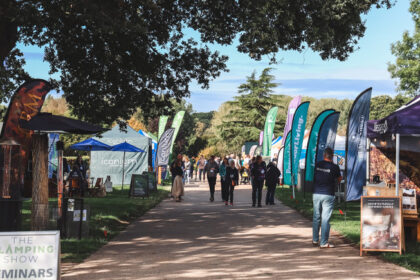
On the closing day of Hospitality – Il Salone dell’Accoglienza in Riva del Garda, the final conference organized as part of FAITA Trentino’s schedule of events focused on accessibility, sustainability, and mobile home design, with special attention to the Di Ognuno’s (everyone’s) needs. This initiative, led by Village for All (V4A) and Lombardini22, aims to draw attention to the necessity of a tourism offering that prioritizes the well-being and complete satisfaction of all guests – every guest – within every hospitality facility.
A panel of experts, including Roberto Vitali (V4A), Leopoldo Busa (BioSafe), Žiga Simončič (Adria Home), Valentina Fimiani (BHI), and Barbara Ronchi Della Rocca (Crippaconcept, etiquette expert), discussed innovations in the mobile home sector aimed at making them more sustainable and accessible to everyone.

The debate was opened by Roberto Vitali. The project “Di Ognuno” (for everyone) addresses demographic change and the needs of people. We talk about accessibility needs, not just the necessities of people with disabilities. According to Vitali, regulations are not enough, and the disabilities that can be visibly recognized are only 20%: the remaining 80% are hidden.
“Disability is not an attribute of a person, but the result of the interaction between the person and the environment in which they act,” said Vitali. “Disability doesn’t take a holiday: people, families, and the aspirations of people go on vacation. Accessibility means reaching, understanding, using independently and safely”. It is clear that the needs of someone who uses a wheelchair are different from those of a person who is visually impaired or blind. That’s why when we talk about accessibility, we shouldn’t think only about wheelchairs. Vitali also discussed these topics during the event dedicated to sustainable and inclusive tourism.

Leopoldo Busa from BioSafe focused on the well-being of people, which needs to be redefined and expanded. Usually, we think of “discomfort” as something immediately visible, but the concept of comfort can also be expressed by considering substances that are dispersed into the environment. Air quality is one of the elements contributing to comfort. When designing mobile homes, it is essential to think about their healthiness, avoiding the emission of harmful substances that could cause allergies—latent disabilities we may not be aware of.
Therefore, it’s important to think about prevention, avoiding the interaction between the environment and individuals that could create disabilities. “The market is becoming very attentive to the concept of sustainability, but this is different from healthiness,” said Busa. “Today’s goal is to raise awareness on a topic that is becoming very important and is being addressed and solved from many different angles”.

Žiga Simončič, a representative of Adria Home, emphasized the fundamental importance of healthiness and sustainability in the production of mobile homes. He highlighted how Adria Home manufactures homes that comply with all ISO standards. Simoncic also reiterated the central role of the Italian market for the company, ensuring that all product ranges meet these high standards. A key aspect is sustainability: Adria Home’s mobile homes are recyclable up to 84%, with the goal of reaching 90% in the upcoming seasons. “These are not just words,” he stated, “but a philosophy that we embrace both for ourselves and for our guests”.

Valentina Fimiani from Bio Habitat Italia highlighted how the presence of factories in Italy helps reduce transportation and, consequently, CO2 emissions. At the core of the company’s philosophy is eco-design, with particular attention to the use of sustainable materials like wood. All Bio Habitat products are designed to guarantee maximum energy efficiency, as demonstrated by the Hata line, which offers 24 solutions aimed at reducing environmental impact.
The company uses A+ class materials to limit the emission of volatile substances, recyclable mattresses, and frames partially made of wood, all in compliance with the European standard EN1647. A distinctive feature is the bold design, intended to ensure perfect integration with the landscape and harmony with the surrounding environment. “This is our concrete commitment to a more sustainable and inclusive future,” she concluded.

Barbara della Rocca, an etiquette expert for Crippaconcept, focused on hospitality in a holistic way, highlighting how the first seven to eight seconds are crucial for forming an opinion about a person, place, or situation. It is difficult to reverse a negative first impression, which is why it’s essential to eliminate any unpleasant sensations right from the moment of arrival. The reception should be clear and easily identifiable, with appropriate opening hours, spaces for temporary car stops, and quick, streamlined check-in procedures. According to Ronchi Della Rocca, setting up effective hospitality in a campsite is an even more complex challenge compared to a traditional hotel.
“The label of etiquette expert feels a bit tight for me,” she clarified. “I prefer to talk about good manners and good communication. The guest must feel welcomed in the right way”. In a campsite, even in the most practical and functional relationships, there is an emotional component, which is felt even more in the context of leisure and vacation. “We notice it when it’s missing,” she observed. Accessibility should not be thought of only for mobile homes, but for the entire facility, ensuring that the experience is inclusive for families and children. Welcoming means engaging with different realities, and this also involves the nationality of the guests: for example, the French or Dutch audience has different expectations. The objective and subjective perception of hospitality can vary greatly, which is why “it’s not enough to respect regulations: they must be applied with humanity”.
Fabio Poletti, president of FAITA Trentino, closed the meeting by thanking the guests: “The topic of sustainability and accessibility is particularly interesting, and it cannot be exhausted in an hour,” he said. “Our goal as an association is to shine a spotlight, to make people understand that topics like this deserve more attention”.